Public Dissent
Artist group statement
As a group of artists we looked at the issues of privacy and identity in relation to contemporary public opinion about photography, surveillance and censorship.
Despite living in a fractured and suspicious social climate, there has been an explosion of online social networks and photo-sharing sites such as YouTube, Facebook and Flickr, where people regularly post details of their personal lives, some of which are extremely intimate, for all to see. This provides a stark contrast to other formal and informal restrictions being placed on photography, where the parameters are shifting in negative ways, determining what may and may not be photographed, particularly in relation to children.
Public fears concerning photographers have escalated and anti-terrorist legislation has encouraged a distrust of photographers to the point where photographing in public is an activity that is routinely treated with suspicion by the police.
People are torn between preserving their privacy and their fears of social exclusion, and as a result often invent alternative identities with which they feel safer and freer to engage with social networks; sometimes to the point of eradicating their previous and real identities as their alter-egos begin to predominate in their everyday lives.
Artist bios and individual statements
Gary Austin
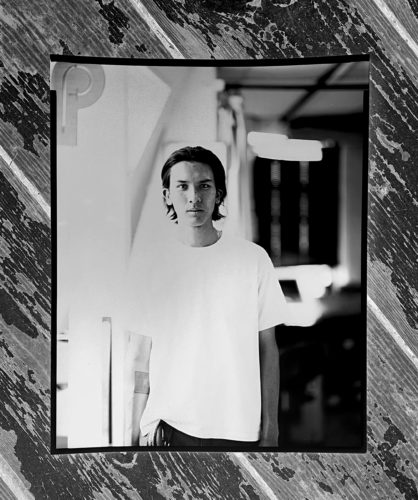
My work centres itself around the areas of street photography, surveillance photography and privacy and the contradiction between them. As a photographer, I invade peoples privacy by photographing them, wrapped up in their own thoughts or private moment, they are unaware they have been photographed, or may not have even seen me on the street, on occasions I make sure they see me. For further information please see www.garyaustin.eu
Hannah Mitchell
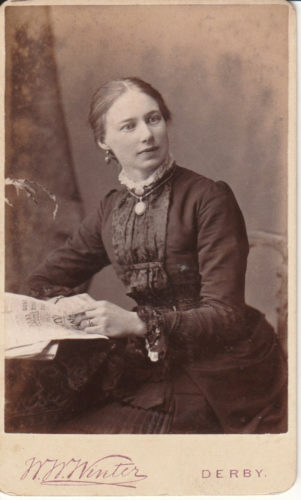
My work considers why people keep photographs and negatives when they no longer know the people within them, and what happens to the images ultimately.
In this piece I used anonymous negatives that I had bought. I am curious about the photographs I buy. Why are they being sold? Has the last person who had a connection to the image died? Without names or stories these people lose their identity, they become faceless, therefore I bleach out the faces.
Laura Mclean
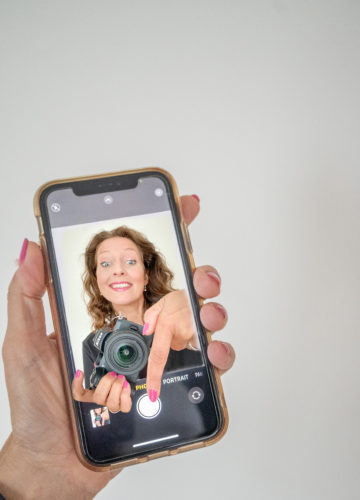
Working with the concept of social networking sites, I have aroused many questions the prominent one being ‘Is our information safe?’ the answer being no! I have harvested much information and could continue to take much more, with the victims being none the wiser, yet we continue to upload more and more information on a daily basis. Why?
Mark Prethero
Mark Prethero was born in the north east of England and is currently based in the Czech Republic. He attended the University of Derby’s Fine Art Photography course and earned his BA degree with honors in 2010. Mark is a student at Jan Evangelista Purkyn University's Photography in English language MgA program in Ústí nad Labem.
'Beneath the pavement, the beach' “Alone, we are forced to recognize that we have been created, like everything else. Only our soles, when encouraged, remember the origin, wordlessly.” (Berger, J. 1992)
This body of work started off with my interest in man made environments and our relationship with nature in the city. I started photographing natural foliage that was growing in derelict spaces attempting to show the relationship between these manmade structures, and how nature is reclaiming these spaces. This led me onto the idea of placing animals against these manmade environments and using the animals to represent different human characteristics in relation to the space in which they are ‘photographed’. The inspiration for each of these images comes from my own past experiences of human behaviour in these spaces. Through making these images I aim to remind us what is wild within what is at least normally a civilised situation. For further information please see www.markprethero.co.uk
Rebecca White
My work revolves around society, the community and the human psyche. As a photographer I wish to re-evaluate the status of people, providing a thoughtful insight on society today. Taking people away from their mundane environment I elevate their status beyond the everyday; altering their minds that confine them within society. As the recession is pushed to the forefront, the impact throughout time of an economic down turn can dramatically impact on the lives of those who live in both urban and rural communities. The subjects are engaged in their own realm however they stand together in their angst, protesting in the form of passive resistance.
The environments in which photographers can produce objective work has become increasingly restrictive. I push the boundaries of risk assessment; twenty years ago such extensive risk assessment barely existed, today everything has to be analysed and assessed. The environments in which photographers can produce objective photography have become increasingly restrictive. Imposing such restrictions may result in a heightened need to escape ones thoughts, feeling trapped in society; a person is free only in his/her mind.
My decision to create work at night is a conscious one to illustrate the sense of isolation and inner loneliness of the portrayed, adding to the sense of fear as nightmares and sleepless nights go hand in hand with anxieties and troubled minds. In addition my work is abstracted by the length of exposure; the blurring of the facial features prevents identification, they are just another cog in the wheel; another number. The intonation is that the figure refuses to be identified or associated with their environment. Subtle abstractions such as face blur and sepia toning take on a role of adding an enigma; disguising any prejudices that we may have, also referring historically to the dawn of photography with long exposure and sepia appearance. There is a desire to escape away from the everyday creating an alien landscape through the haze of the night and reflect another’s thoughts and emotions. I deliberately appear in some of my photographs to show my concerns about the environment and indeed my own employment in the future.
Passive Resistance series, 2010